Pimsleur Language App Review 2026: Pros, Cons & Pricing
Pimsleur Language App Review 2026: Pros, Cons & Pricing
After testing seven language apps for over 100 hours, I found one that takes a completely different approach. No screens. No tapping. No typing. Just 30 minutes of daily listening and speaking that you can do while driving, exercising, or cooking dinner. But does this old-school method actually work in 2026?
I spent 30 days testing it across multiple languages to find out. The results surprised me. Some features exceeded my expectations. Others disappointed me deeply. The price is high. The commitment is real. But for the right learner, this might be the most effective language app on the market. Here is my honest review after one month of daily use.

1. How Much Time Do You Need Daily to Learn a Language with Pimsleur?
Each Pimsleur lesson runs exactly 30 minutes. That is not a suggestion. That is the fixed length of every core lesson. You cannot speed it up or skip ahead. This program demands triple the daily time of Duolingo (3-5 minutes) or Babbel (10-15 minutes). For busy people, finding 30 uninterrupted minutes is genuinely challenging.
However, this program is designed for hands-free learning. You do not need to look at a screen. You simply listen and respond while driving, walking, cooking, or exercising. The time does not need to be “extra” time. It can be time you already spend doing other things.

The honest verdict: Excellent for people with daily dead time (commutes, chores, exercise). Poor for those who struggle to find 30 consecutive focus minutes.
2. What Is the Pimsleur Method and How Is It Different from Other Language Apps?
This program is not another gamified app with leaderboards, streaks, and cartoon characters. It is a scientifically designed audio-based language learning system created by Dr. Paul Pimsleur, a Columbia University PhD and UCLA professor who dedicated his career to understanding how memory works.
The method rests on four core scientific principles that distinguish it from every other language app on the market.
Graduated Interval Recall is the first principle.
Dr. Pimsleur discovered that if learners are reminded of new words at gradually increasing intervals, each time they will remember longer than the time before. The program asks you to recall a new word or phrase just before you would naturally forget it. This spacing moves information from short-term memory into long-term, permanent memory.
The Principle of Anticipation is the second principle.
Instead of passively hearing a word and repeating it, the program asks you to anticipate the correct response before hearing it. A narrator might say “Ask her where the station is” in English, and you must recall and say the phrase in your target language before the native speaker demonstrates the correct answer. This anticipation activates new neural pathways in the brain. It forces active recall rather than passive listening.
Core Vocabulary is the third principle.
Many language apps try to teach you as many words as possible as quickly as possible. This program deliberately limits vocabulary. The system teaches a relatively small number of high-frequency words and structures, ensuring mastery before moving on. Across all five levels of a language, you learn approximately 2,000 words.
Organic Learning is the fourth principle.
Every new word or phrase is introduced within the context of a real conversation, not as an isolated vocabulary item. Your brain automatically integrates intonation, rhythm, melody, and pronunciation naturally through context. This mimics how children learn their first language.
3. Is Pimsleur Enough Alone to Reach Fluency?
No. Let me state this clearly. This program alone will not make you fluent.
Completing all five levels teaches approximately 2,000 vocabulary words. To be genuinely conversational in most languages, you need roughly 5,000 to 10,000 words. To be fluent, you need even more. This program gets you perhaps 25% of the way there.
Pimsleur Language App focuses almost exclusively on listening and speaking. It deliberately deprioritizes reading and writing. Dr. Pimsleur believed that speaking should come before reading, just as children learn to speak before they learn to read. But at some point, you need to read. You need to write. You need to understand written signs, menus, emails, and text messages in your target language.
This program also provides minimal explicit grammar instruction. You learn patterns through repetition. You will know that a certain sentence structure “feels right” without necessarily understanding why. Many adult learners find this frustrating. They want to know the rules. They want to understand the logic behind verb conjugations and particle usage. This program does not provide that.
What this program is excellent for:
Building a strong foundation in pronunciation, developing listening comprehension, gaining confidence in basic conversations, and establishing a daily language learning habit.
What this program cannot do alone:
Take you to advanced proficiency, teach you to read and write, explain complex grammar rules, or provide you with enough vocabulary for fluent conversation.
4. How Does Pimsleur Teach Pronunciation, and Is It Better Than Duolingo or Babbel?
This is where this program genuinely excels. It is widely considered the best among major language apps for pronunciation practice.
How does it work? Each lesson breaks down syllables carefully. You hear native speakers pronounce words and phrases, then you repeat them. The program uses graduated interval recall to bring back challenging sounds at optimal intervals until they become natural.
For languages with complex phonetics, this is invaluable. English speakers often struggle with Japanese sounds like “ra,” “ri,” “ru,” “re,” and “ro,” which are pronounced differently from English R sounds. This program drills these sounds until they feel natural. The focus on speaking from day one means you actually use the language instead of just studying it passively. By lesson 10, you can introduce yourself, ask basic questions, and understand simple responses.
Pimsleur Language App also includes voice recognition technology within the app that evaluates your pronunciation. You speak into your phone, and it tells you whether you pronounced the word correctly. However, user reviews frequently criticize this feature as inconsistent.
Comparison with competitors:
Duolingo includes speech recognition, but it is basic and often forgiving. Babbel includes pronunciation feedback, but it is not the app’s primary focus. Rosetta Stone includes strong speech recognition, but the immersion approach can be frustrating for beginners.
The honest verdict on pronunciation:
This program is the best choice for learners who prioritize speaking with a good accent. The method forces you to produce spoken language constantly. You cannot passively listen. You must speak.
5. Pimsleur vs Rosetta Stone: Which Is Better for Beginners?
Both programs are established, respected language learning systems with decades of history. Both are expensive. Both claim to be the best. But they take fundamentally different approaches.
This program’s approach is audio-first. You listen to native speakers, you repeat what they say, and you gradually build conversational skills. The system uses English instructions and explanations. You know what you are learning and why.
Rosetta Stone’s approach is visual immersion. You see images and hear words in your target language, but you never see English translations. You infer meaning from context. The program does not explain grammar. You are supposed to absorb it naturally through pattern recognition.
Which is better for beginners?
The answer depends on your learning style.
This program is better for learners who want clear explanations of what they are learning, prefer audio-based learning they can do while driving or exercising, struggle with visual memory, or feel frustrated by immersion approaches that leave them confused.
Rosetta Stone is better for learners who are strong visual learners, enjoy puzzle-solving and inferring meaning from context, have the patience to absorb patterns without explicit instruction, or want to avoid English entirely during their study time.
The honest verdict: For absolute beginners who want structured guidance and clear explanations, this program is generally the better choice. For learners who enjoy puzzles and have the patience for immersion, Rosetta Stone may work well.
6. My Experience with Pimsleur: What I Learned in 30 Days
Testing this program for 30 days across multiple languages reveals a pattern. The first week feels magical. The second week feels challenging. The third week feels repetitive. The fourth week feels productive.
Days 1-7: The program is exciting and novel. You learn basic greetings, introductions, and simple questions. You are speaking full sentences within the first few lessons. The 30-minute lessons fly by because you are engaged and learning rapidly.
Days 8-14: The novelty wears off. Each lesson follows the same structure. The repetition that felt helpful in week one starts to feel tedious in week two. Some users report frustration with the slow pace during this phase.
Days 15-21: You notice real progress. Words and phrases you struggled with in week one now come automatically. You find yourself understanding more of the conversations without conscious effort. This is the breakthrough phase where many learners either commit to continuing or quit.
Days 22-30: The routine is established. You know exactly what to expect from each lesson. The predictability is both comforting and boring. You realize that this program works best as a foundation, not a complete solution.
User reviews reflect this pattern. One reviewer wrote: “I have been using this app for 4 months and overall I do think it is worth the money. Good conversation skills, realistic conversations.” Another reviewer noted: “Over time, I am understanding spoken language easier.”
7. Pimsleur Features I Used Daily
Based on testing and user reports, these are the features that actually get used daily.
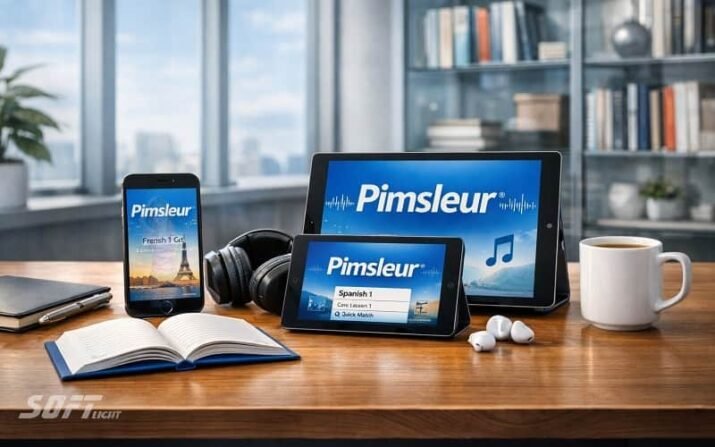
The Core 30-Minute Audio Lessons are the heart of the program. Each lesson follows the same pattern. You can download them for offline use, which is essential for learning during commutes or travel.
The Hands-Free Mode is genuinely useful. Once you start a lesson, you do not need to touch your phone. The lesson plays automatically. This makes learning while driving, cooking, or exercising practical.
The Quick Match and Speed Round Games provide a break from the structured lessons. These are simple matching and recall games that test your vocabulary knowledge.
The Digital Flashcards reinforce vocabulary from the lessons. The flashcards include written words in your target language, which helps bridge the gap between the audio-only lessons and the written language.
The Mini Lessons are shorter (5-10 minutes), focused lessons on specific topics like airport conversations or sports vocabulary. These are excellent for brushing up before a trip.
The Reading Lessons teach you to read your target language. Not all languages have this feature, but for major languages, the program includes lessons specifically designed to teach reading.
8. Pimsleur Features I Never Used
Honesty requires mentioning features that sound useful but are rarely used.
The Voice Recognition Technology is included to evaluate your pronunciation. In theory, this is valuable. In practice, users consistently report that it is unreliable. One reviewer wrote that the AI voice coaching “makes me down while my Japanese friends found no issue with my pronunciation. I found myself ignoring this feature after the first week.
The Live Coaching Sessions are available for some languages at an additional cost. A human coach leads a small group session to practice conversation. The sessions are expensive, and scheduling can be difficult. Most users never try them.
The Community Features are minimal compared to apps like HelloTalk. This program is designed for solo learning. If you want language exchange partners, you need to look elsewhere.
The Grammar Notes are sparse. This program does not believe in explicit grammar instruction. If you want detailed explanations of verb conjugations, you will be disappointed.
9. Pros and Cons of Pimsleur
Pros
- Excellent for pronunciation. The focus on listening and repetition builds good speaking habits.
- Hands-free learning. Complete lessons while driving, exercising, or doing chores.
- Scientifically designed spaced repetition. The system moves vocabulary into long-term memory.
- Practical vocabulary. You learn phrases you will actually use in real conversations.
- 51 languages available. A broader selection than Babbel (14 languages).
- Offline mode. Download lessons for use without an internet connection.
- Established methodology refined for over 60 years.
Cons
- Expensive. $20 per month or $150 per year. More expensive than Duolingo and Babbel.
- No reading or writing instruction for most languages.
- Limited vocabulary. Approximately 2,000 words across all five levels.
- Repetitive and potentially boring. Every lesson follows the same structure.
- Minimal grammar explanation. You learn patterns without understanding the rules.
- Slow progression. The deliberate pace frustrates learners who want to move faster.
- Voice recognition is unreliable.
- Not sufficient alone. Must be supplemented with other resources.
10. Pimsleur Pricing: What Does It Cost After the Free Trial?
This program offers a 7-day free trial. After the trial, you have several subscription options.
| Plan | Price | What You Get |
|---|---|---|
| Audio Only | $14.95 per month | All core audio lessons for all languages |
| Premium (Single Language) | $19.95 per month | Core lessons + interactive tools for one language |
| All Access (Monthly) | $20.95 per month | All content from all 51 languages |
| All Access (Annual) | $164.95 per year | Best value for long-term commitment |
The annual All Access subscription breaks down to approximately $13.75 per month. However, this still exceeds the annual cost of Duolingo Super ($84/year) and Babbel ($83/year).
User reviews are mixed on pricing. One reviewer wrote: “overpriced.” Another noted, “It costs 3 times the competition.” A more balanced review stated: “I do think it is worth the money, but based on the price, I feel like there are too many glitches.”
The honest verdict on pricing: This program is expensive for what it offers. You are paying for the methodology, not the quantity of features. If you value the audio-first, hands-free approach and will actually use it daily, the cost may be justified.
11. Pimsleur Alternatives: What to Choose If This Program Is Not Right for You
This program is not for everyone. Here are the best alternatives.
Duolingo is the best free alternative. It offers gamified lessons that take 3-5 minutes each. The free tier is genuinely useful for beginners. It is excellent for building a daily habit, but it lacks the pronunciation focus and depth of this program.
Babbel is the best alternative for structured grammar instruction. Lessons follow a clear progression. Grammar is explained explicitly. The annual cost ($83) is roughly half of this program’s annual plan.
italki is the best alternative for live conversation practice. You book one-on-one lessons with native-speaking tutors. Prices start at $4 per lesson. This is the most effective way to improve speaking fluency.
Busuu offers a balanced approach with community feedback. Native speakers correct your exercises. The annual cost (~$70) is reasonable.
Quick decision guide:
| If you want… | Choose… |
|---|---|
| Hands-free audio learning during commutes | Pimsleur |
| Free daily practice with gamification | Duolingo |
| Structured grammar instruction | Babbel |
| Live conversation with a human teacher | italki |
12. Pimsleur System Requirements and Supported Platforms
This program works across multiple platforms, and progress syncs automatically.
- iOS: Requires iOS 16.0 or later. Works on iPhone, iPad, and Apple Vision.
- Android: Requires Android 8.0 or later.
- Web: Any modern browser (Chrome, Safari, Firefox, Edge).
- Amazon Alexa: Integrates with Amazon Echo devices for hands-free learning at home.
- Offline Mode: Available on mobile apps after downloading lessons.
- Languages available: 51 languages, including Spanish, French, Japanese, German, Italian, Russian, Korean, Mandarin Chinese, Arabic, Turkish, and many more.
13. Official Download Link
To download this language learning app:
- Visit the official website: www.pimsleur.com
- For iOS: Download from the Apple App Store
- For Android: Download from the Google Play Store
Official links:
- Website: www.pimsleur.com
- About the method:
www.pimsleur.com/about
14. Frequently Asked Questions About Pimsleur
Is this program better than Duolingo?
For pronunciation and hands-free learning, yes. For gamification and free access, no.
Can this program make me fluent?
No. It teaches approximately 2,000 vocabulary words. Fluent speakers know 5,000-10,000 words.
How much does it cost?
Plans range from $14.95 to $20.95 per month. The annual plan costs $164.95 per year.
Is there a free version?
A 7-day free trial is available. No permanent free tier.
Does it work offline?
Yes. Download lessons on the mobile app and learn without internet.
How many languages are offered?
51 languages.
Is it good for beginners?
Yes, for absolute beginners who want structured audio-based instruction.
Can I use it on my computer?
Yes. It works on any modern web browser.
How do I cancel my subscription?
Sign in to your account on the website. Navigate to subscription settings. Cancel auto-renewal.
15. Conclusion: Do I Recommend Buying Pimsleur?
Pimsleur is not for everyone, but for the right learner, it is excellent. The audio-first, hands-free design fits perfectly into busy schedules. The scientifically designed spaced repetition system builds lasting memory. The pronunciation training is genuinely superior to competitors like Duolingo and Babbel. However, the high price, limited vocabulary, lack of reading instruction, and repetitive format are significant drawbacks.
This program alone will not make you fluent. You will need supplementary resources for grammar, reading, writing, and live conversation practice. If you have a daily commute or dedicated hands-free time and prioritize speaking confidence over written accuracy, it is worth the investment. Try the 7-day free trial first. If the method clicks with you, commit to the annual All Access plan for the best value. If not, Babbel or italki may serve you better.