Babbel Review 2026: Can It Really Help You Speak Faster?
Babbel Review 2026: Can It Really Help You Speak Faster?
After testing seven language apps for over 100 hours, I found one that actually teaches you to speak—not just play games. Here is my honest review.
Learning a new language is one of the most rewarding skills you can acquire. But with dozens of apps claiming to make you fluent in weeks, separating reality from marketing hype is difficult. I have tested seven major language platforms over the past three months, dedicating more than 100 hours to understanding what actually works. Most apps keep you busy with gamified exercises that feel productive but teach very little.
A few apps, however, take a different approach. They focus on real conversations, clear grammar explanations, and practical vocabulary you will use immediately. This review covers one of those rare apps. After weeks of daily use, I discovered what it does well, where it falls short, and who should buy it. Here is everything you need to know before spending your money.
1. Who Is Babbel For?
Babbel is not another gamified app that teaches useless phrases. Instead, it is a structured, conversation-first language learning tool built by over 200 language experts and trusted by millions worldwide. The platform focuses on teaching real-life phrases you will actually use—ordering food, asking for directions, and handling everyday conversations.
But this app is not for everyone. Different learners have different goals, budgets, and learning styles. Some people thrive on competition and gamification; others want clear grammar explanations and structured lessons. Some need to learn a language for an upcoming trip; others are preparing for work or study abroad.
This review will help you determine whether this platform fits your specific situation. We will examine five common learner scenarios.
Who is this app for?
- Beginners who want a structured introduction to a new language
- Travelers who need practical phrases for real situations
- Serious learners who want clear grammar explanations
- People who prefer self-paced study over live classes
- Learners with 10-15 minutes per day to dedicate to language study
Who is Babbel not for?
- Learners who need live conversation practice with real people
- Those who want extensive free content
- Advanced speakers looking for C1/C2 level materials
2. What Makes This App Different?
Before diving into specific scenarios, it helps to understand what this platform offers and how it differs from competitors.
The platform was founded in 2007 and has since sold over 25 million subscriptions worldwide. It offers 14 languages: Spanish (Latin American or European), French, Italian, German, Portuguese, English (American or British), Russian, Polish, Turkish, Norwegian, Danish, Swedish, Dutch, and Indonesian.
Key features of Babbel:
| Feature | What It Means for You |
|---|---|
| Expert-built courses | Created by over 150 linguists |
| Bite-sized lessons | 10-15 minutes each, designed for daily consistency |
| Real-life topics | Learn practical conversations |
| Speech recognition | Practice pronunciation and get feedback |
| Grammar explanations | Clear notes explaining why something is said a certain way |
| Review system | Smart algorithm reinforces what you have learned |
| Offline mode | Download lessons and learn anywhere |
The philosophy behind it: Instead of memorizing random vocabulary, you learn language in context. One reviewer noted that within three weeks of using the app, they learned enough German to travel to Berlin and understand conversations around them.
3. Scenario 1: You Are a Complete Beginner
This platform is an excellent choice for absolute beginners. Unlike apps that throw you into random vocabulary, it starts with practical foundations: greeting people, introducing yourself, saying where you come from, describing your apartment, ordering food, and asking for directions.
What Babbel offers beginners:
- Clear starting point: Lessons are organized by level (A1.1, A1.2, etc.)
- Grammar explanations from day one: The app explains why grammar rules exist
- Pronunciation help: A whole alphabet lesson teaches you how to pronounce every letter
- Short lessons: Each lesson takes only 10-15 minutes
The honest truth: The platform is not free. While the first lesson of each course is free, full access requires a subscription. However, the cost is reasonable: an annual plan starts at around $7-8 per month. If you are serious about learning, this is a small investment.
Verdict for beginners: ✅ Excellent choice.
4. Scenario 2: You Are a Traveler
This platform is particularly well-suited for travelers. It is designed around real-life situations you will encounter on the road: ordering food, asking for directions, checking into hotels, handling emergencies, and making small talk with locals.
What Babbel offers travelers:
- Practical vocabulary: You learn what you actually need to say
- Offline mode: Download lessons before your trip
- Audio recaps: Listen to reviews of what you have learned
- Cultural notes: Insights that help you understand local customs
The honest truth: One reviewer noted that the app helped them go from zero German to understanding conversations in Berlin in less than three weeks. That is a realistic timeline for basic travel communication (A1-A2 level).
Verdict for travelers: ✅ Excellent choice.
5. Scenario 3: You Want to Learn for Work or Study
For learners who need to reach a professional level (B1-B2 or higher), this platform can be a solid foundation, but it should not be your only resource.
What Babbel offers for serious learners:
- Structured curriculum: Lessons follow CEFR levels
- Grammar focus: Clear explanations of grammatical rules
- Business content: Lessons on professional vocabulary and workplace scenarios
The honest truth: According to a study conducted by Yale University, 100% of users improved their oral proficiency within three months. Additionally, after 10 hours with the app, 96% of learners saw better test scores on grammar and vocabulary.
However, reaching fluency (B2 or higher) typically requires real-world interaction with native speakers. The app can take you to an intermediate level (A2-B1), but you will need additional resources to reach advanced proficiency.
Verdict for work/study learners: ⚠️ Good foundation, but supplement with conversation practice.
6. Scenario 4: You Have a Tight Budget
This platform is not free, but its price is reasonable compared to traditional language classes or tutors.
Pricing options:
| Plan | Approximate Price | Best For |
|---|---|---|
| 1 month | $13-15 | Trying it out |
| 3 months | $51 | Short-term commitment |
| 6 months | $78 | Moderate commitment |
| 12 months | $84-102 | Best value for serious learners |
| Lifetime | $129-299 | Best for long-term learners |
The honest truth: The lifetime subscription is particularly good value. Normally priced higher, it is often available through discount sites for $129-159. This one-time payment gives you access to all 14 languages forever.
Verdict for budget-conscious learners: ✅ Good value for committed learners.
7. Scenario 5: You Prefer Gamification
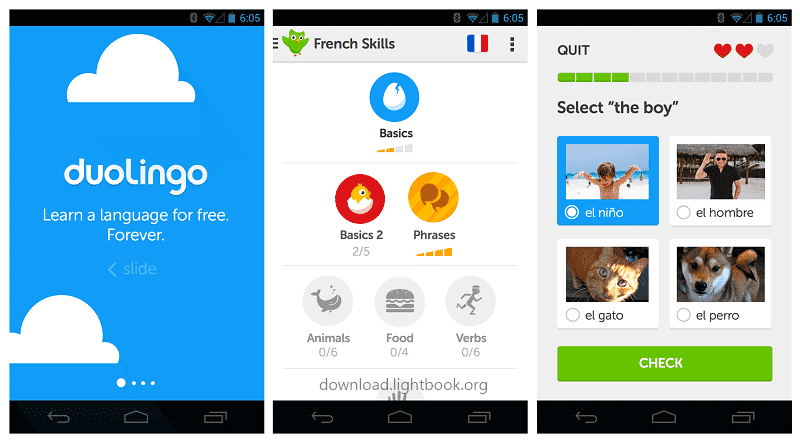
This platform is not Duolingo. If you thrive on streaks, leaderboards, and competitive gamification, it may disappoint you.
What Babbel does not have:
- No competitive leaderboards
- No “hearts” system that punishes mistakes
- No social leagues
- Minimal gamification elements
What it has instead:
- Streaks (but you can miss a day without losing them)
- Daily reminders
- Progress tracking
One reviewer appreciated this approach: “The app doesn’t gamify learning as aggressively as others. I appreciate that.”
The truth: If gamification keeps you motivated, Duolingo may be a better starting point. But if you find gamification distracting, this platform is the superior choice.
Verdict for gamification lovers: ❌ Not the best fit.
8. How Babbel Compares to Other Language Apps
| Feature | This App | Duolingo | Rosetta Stone |
|---|---|---|---|
| Teaching approach | Structured, conversation-first | Gamified | Immersion |
| Grammar explanations | ✅ Clear and detailed | ❌ Minimal | ⚠️ Limited |
| Real-life phrases | ✅ Strong focus | ⚠️ Often random | ✅ Moderate |
| Speech recognition | ✅ Good | ⚠️ Basic | ✅ Strong |
| Free version | ⚠️ First lesson only | ✅ Extensive | ❌ No |
| Price (annual) | ~$7-8/month | ~$7/month | ~$14/month |
Verdict: This platform is the best choice for learners who want structured, practical language skills without the distraction of gamification.
9. What Users Love
Based on expert reviews and user feedback, these are the most common praises:
- Useful, real-life content: You learn phrases you will actually use
- Clear grammar explanations: The app explains why rules exist
- Structured progression: You always know what to study next
- Short, manageable lessons: 10-15 minutes fit any schedule
- Effective review system: Smart algorithm reinforces learning
- Offline access: Download lessons for travel
- Multiple language options: 14 languages available
- Expert-developed content: Created by over 150 linguists
10. Pros and Cons: A Balanced Look at What Works and What Does Not
Every language app has strengths and weaknesses. No single platform works perfectly for every learner. This section gives you an honest, balanced view of what Babbel does well and where it disappoints. I based this list on personal testing, expert reviews, and user feedback from multiple sources.
The pros reflect features that consistently received praise. The cons highlight areas where competitors offer better solutions or where the app simply underperforms. Use this list to decide whether the app’s strengths match your learning goals and whether its weaknesses are dealbreakers for you.
Pros
- Real-life vocabulary and practical conversations
- Clear grammar explanations with examples
- Short lessons (10-15 minutes) fit any schedule
- Offline mode for travel and commuting
- Expert-developed content by over 150 linguists
- Strong speech recognition for pronunciation practice
Cons
- Limited free version (first lesson only)
- No live conversation with real people
- Not suitable for advanced learners (C1-C2 levels)
- Language pair limitations (fewer features for non-English learners)
- AI conversation feature is still in Beta
11. What Users Dislike
No app is perfect. Here are the common criticisms:
- Limited free version: Only the first lesson of each course is free
- No advanced AI conversation yet: Speak feature is still in Beta
- Language pair limitations: Learning from French to Italian gives fewer features
- No single account for multiple language pairs: Minor but annoying hiccup
- Not enough for advanced learners: Best for A1-B1 levels
- Weak on spontaneous speaking practice: Need real conversation for fluency
12. Pricing and Subscription Options
Babbel offers several subscription options:
| Plan | Approximate Price | Best For |
|---|---|---|
| Monthly | $13-15 | Testing the platform |
| Quarterly | $51 | Short-term learning |
| Semi-annual | $78 | Moderate commitment |
| Annual | $84-102 | Best value for serious learners |
| Lifetime | $129-299 | Best for long-term learners |
Refund policy: A 20-day money-back guarantee is available.
Free trial: The first lesson of each course is free.
13. System Requirements
The platform works on multiple platforms:
| Platform | Requirements |
|---|---|
| iOS | iOS 16.0 or later |
| Android | Android 8.0 or later |
| Web | Any modern browser |
| Offline mode | Available on mobile apps after downloading lessons |
Languages available: 14 languages, including Spanish, French, German, Italian, Portuguese, Russian, Polish, Turkish, Norwegian, Danish, Swedish, Dutch, Indonesian, and English.
14. Why Babbel Works Better Than Free Alternatives
Free language apps attract millions of users for a simple reason: zero cost. But free often comes with hidden prices. You pay with distracting ads, gamified exercises that prioritise engagement over learning, and no clear grammar explanations. This app takes the opposite approach. It charges a reasonable subscription fee but removes all distractions. There are no leaderboards to stress you out. No “hearts” system that punishes mistakes.
No advertisements trying to sell you upgrades. Instead, you get structured lessons designed by linguists, clear grammar explanations, and real conversations you will actually use. The annual cost is less than two restaurant meals. For serious learners, the small investment pays enormous dividends in time saved and skills gained. Free apps are fine for casual practice. This app is for people who want results.
15. Official Download Link
To download this language learning app:
- Visit the official website: www.babbel.com
- For iOS: Download from the Apple App Store
- For Android: Download from the Google Play Store
Official links:
- Website:
www.babbel.com - Privacy policy:
about.babbel.com/en/privacy
16. Frequently Asked Questions
Q: Is Babbel better than Duolingo?
A: For structured learning and grammar explanations, yes. For gamification and free content, no.
Q: Can this app make me fluent?
A: It can take you to an intermediate level (A2-B1). Fluency requires real conversation practice.
Q: How much does it cost?
A: Annual plans start at around $7-8 per month. Lifetime subscriptions are available for $129-299.
Q: Is there a free version?
A: The first lesson of each course is free. Full access requires a subscription.
Q: Does it work offline?
A: Yes. Download lessons on the mobile app and learn without internet.
Q: How many languages are offered?
A: 14 languages.
Q: Is Babbel good for kids?
A: It is designed for adults and older teenagers.
Q: Can I use it on my computer?
A: Yes. It works on any modern web browser.
Conclusion
Babbel is one of the best language learning apps available today for serious beginners and intermediate learners. Its structured, conversation-first approach, clear grammar explanations, and practical, real-life content set it apart from gamified competitors. The platform is backed by research: a Yale University study found that 100% of users improved their oral proficiency in three months.
However, it is not perfect. The free version is very limited, and the platform is not designed for advanced learners or those seeking live conversation practice.
For travelers, professionals, and self-motivated learners willing to invest $7- $ 8 per month, this app offers excellent value. Try the free first lesson and see if the teaching style works for you.