Signs of the Great Tribulation in Our Time
Signs of the Great Tribulation in Our Time
Introduction
Every day we wake up to news of new disasters. War here, earthquake there, corruption here, crime there. The chaos we see today is not just passing events—it has become a system. The cruelty we touch is no longer an exception—it has become a norm. These signs remind me of Christ’s words, which warned us centuries ago: “You will hear of wars and rumors of wars… and there will be earthquakes in various places, famines and plagues.”
But is what we see today merely the “beginning of birth pains” that Christ spoke of, or have we already entered the time of the “great tribulation” that will precede His return? “The signs are there—but the eyes may not see them.” This article is an attempt to understand what we are living through—not to cause fear, but to prepare. No one knows when the end will come, but the signs are becoming clearer.
1. Chaos: Punishment or Test?
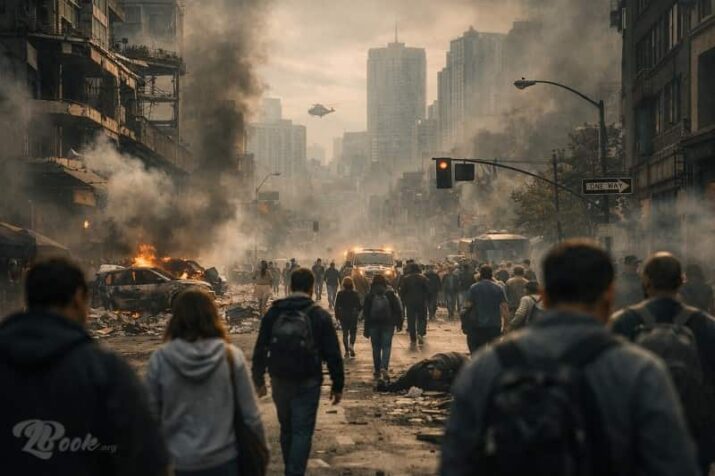
The disorder we live in today is not a coincidence. It is the result of accumulated neglect, injustice, and distance from God. But the deeper question is: Is it a punishment from God for our evils, or a test to see if we will return to Him or drift further away? “Punishment and test may be two sides of the same coin.” Punishment is the inevitable result of error, but testing is the opportunity for correction.
In Scripture, we see that God allowed His prophets to test His people—not because He wanted to destroy them, but because He wanted to reform them. The turmoil we see today may be a call to return before it is too late. The question is not “Why is this happening?” but “What will I do about this?” The signs invite us to reflect, not to despair.


2. Signs and Prophecies
Christ said: “You will hear of wars and rumors of wars… and there will be earthquakes in various places, famines and plagues.” These warnings mentioned in the Gospel have become daily reality. “Wars are no longer news—they have become the background of daily life.” Conflicts here, disasters there, plagues sweeping the world. Corruption that has become a system, cruelty that has become a norm—all are warnings of a troubled time.
When we read the Gospel, we find that Christ described the signs of the end with great precision. The difference today is that the warnings have become global, reaching every person through social media. No place is far from turmoil. This universality makes the signs more visible, and confronts us with a reality we cannot ignore.
3. Hardened Hearts
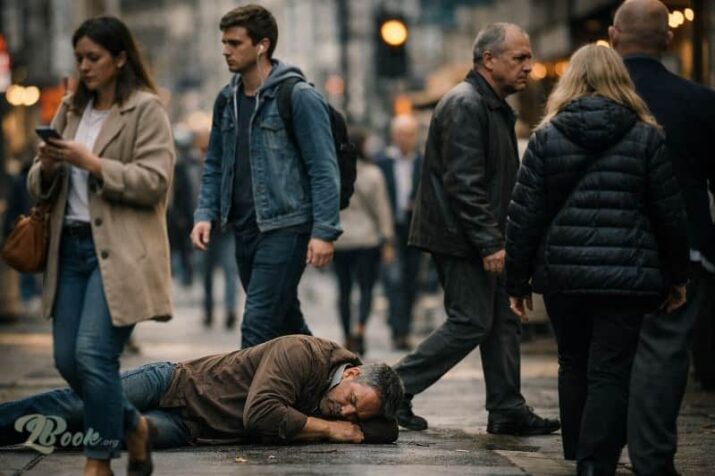
Christ warned that in the last days “the love of many will grow cold.” This warning is the most visible in our time. “Hearts that once beat with love now explode with hatred.” We see cruelty in relationships, coldness in families, enmity between neighbors. Fathers neglect their children, sons cut ties with their parents, friends betray each other. This is the mark of the end: when love dies from human hearts.
Have we asked ourselves why cruelty has become normal? Why do we pass by a needy person without turning? Why has the kind word become rare, and the hurtful word become common? The answer is that love has grown cold. When love grows cold, a person becomes cruel. When they become cruel, they become ready for any evil. This cruelty allows wars to become ordinary, and corruption to become acceptable.
4. Corruption as a System
Corruption is no longer individual mistakes—it has become a system. “Corruption is no longer the exception—it has become the rule.” In politics, in economics, in society, in relationships. Those who steal no longer feel shame—they boast. Those who oppress no longer fear—they challenge. Corruption has become a culture, not just individual behavior. When corruption becomes the rule, goodness becomes the exception.
In our society, we see corruption everywhere: in government institutions, in private companies, in personal relationships. It has become normal for an employee to steal time, for a merchant to lie about goods, for a spouse to betray. This moral decline is part of the warnings of the end. When corruption spreads like this, society becomes sick and needs spiritual surgery.
5. Wars and Scripture
The wars we see today remind us of biblical prophecies that spoke of wars and destruction in the last days. “Wars are no longer far away—they are at our doorsteps.” We hear of wars here and there, of destruction and ruin, of people dying with no one weeping over them. These wars are not just political conflicts—they are part of a larger picture.
In the Old Testament, we see that wars were punishment for the evils of nations. But they were also a call to repentance. When we reflect on today’s wars, we see they still carry the same message. Every war is a call to question: Where are we in relation to God? Every destruction is a reminder that this world is not eternal.
6. Distraction from God
In times of turmoil, people become preoccupied with survival and forget to ask about the meaning of it all. “Preoccupation with living prevents a person from thinking about the meaning of life.” People are busy with eating and drinking, with work and homes, to the point that they do not see the signs around them. Christ warned of this: “As it was in the days of Noah, so it will be at the coming of the Son of Man.”
We are busy in the same way today—so occupied with the details of life that we forget to ask: “Is what we are living through normal? Or does it carry a message?” Distraction from God is the most dangerous kind of distraction, because it keeps a person living in unawareness.
7. Tribulation in Scripture
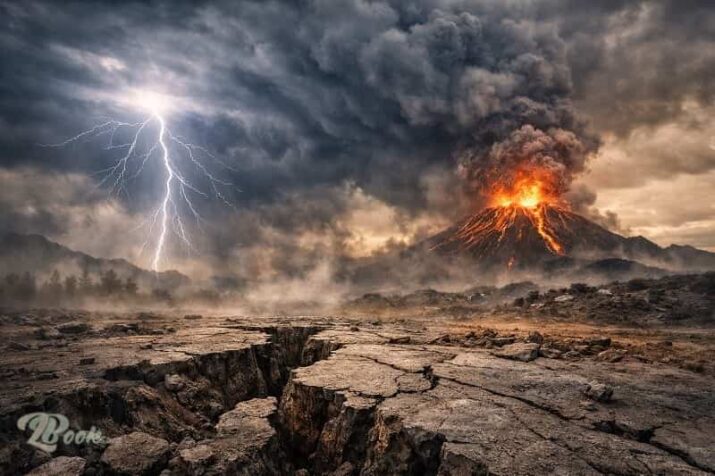
Christ spoke of “great tribulation, such as has not been since the beginning of the world until this time, no, nor ever shall be.” “The great tribulation is not just punishment—it is a period of purification.” It is a time of severe pain, but also a time of preparation. It is a time of breaking down all that is false and revealing all that is true. The great tribulation is the peak of pain, but also the peak of hope.
Christ did not speak of the great tribulation to frighten people—but to prepare them. He wanted to say: “Prepare yourselves, because the coming days will be difficult. But those who stand firm in faith will see salvation.” The great tribulation is spiritual surgery—breaking down the false and revealing the true.
8. Birth Pains: Beginning or End?
Christ spoke of the “beginning of birth pains” and the “great tribulation.” The difference between them is in intensity. “The beginning of birth pains is a warning—the great tribulation is the result.” The beginning of birth pains is the warning signs: wars, earthquakes, plagues, famines. These signs are a call to attention. The great tribulation is the peak of pain that comes when people do not pay attention.
Are we in the beginning of birth pains or in the great tribulation? No one knows. But we see the signs Christ spoke of. The important thing is to be ready for anything. Preparation is not in knowing the timing—but in knowing the way. Preparation is to live each day as if it were your last.
9. Spiritual Blindness
Spiritual blindness is the most dangerous kind of blindness. “Those who do not want to see, their eyes see nothing.” Many do not see the signs because they do not want to see them. They prefer denial over confrontation. They prefer a comfortable life over difficult vigilance. Spiritual blindness is not just a lack of knowledge—it is a refusal of truth.
In our time, we see many refusing to see the signs. Refusing to talk about the end, refusing to think about punishment, refusing to admit that something is wrong with their path. This refusal is more dangerous than we imagine. The question we must ask ourselves: Am I spiritually blind?
10. What to Do Now
If you are living in a time of chaos, you are not powerless. “Living in a time of chaos is not an excuse to surrender—it is a call to endure.” There are steps you can take: stay vigilant, return to God, be patient, live by faith. Do not let chaos break you. Let it refine your faith. Do not let evil control you. Confront it with good.
Do not wait for the world to change. Start with yourself. Change what is in your hands. Pray more. Love more. Be more patient. This is Christ’s command: “By your patience possess your souls.” Patience is not passivity—it is strength in the face of the storm.
11. Hope Despite Punishment
Even in the midst of punishment, hope remains. “Darkness does not erase light—it shows its strength.” Scripture does not end with despair—it ends with hope. The great tribulation is not the end—it is a prelude to the Kingdom of God. Those who stand firm in faith will see light after darkness. Hope is not foolishness—it is confidence that God has not abandoned the world.
In the Old Testament, we see that God was with His people in the midst of their afflictions. He did not leave them in the fire alone—He was with them in the fire. This is our hope today. That God has not left us. That He is with us in the midst of chaos. That He hears the cry, sees the tears, and promises restoration.
12. How to Live Now
The conclusion I reached is: “We do not know when the days will end—but we know how to live them.” We do not know when the great tribulation will come, but we know it will come. We do not know when the end will come, but we know it will come suddenly. The important thing is not knowing the timing—but knowing the way. “The signs are there—but the eyes may not see them. Ask God to open your eyes.”
Live each day as if it were your last. Repent from every sin. Love every person. Be ready to meet God. This is the way in a time of chaos. This is salvation in a time of loss. This is light in the midst of darkness. Remember that you are not alone. God is with you. Draw strength from this support. Do not let despair control you. Move forward, trusting that God holds your hand.
Recommendations
1. Stay vigilant. Do not let life’s busyness prevent you from asking about its meaning.
2. Return to God. The chaos we see is a call to return.
3. Do not fear punishment. Punishment may be mercy in a harsh form.
4. Be patient. The end will be good, even if the road is hard.
5. Live each day as if it were your last. Do not delay repentance.
6. Love others. Love is the only weapon that defeats darkness.
7. Remember that God does not abandon you, even in the darkest times.
8. Open your eyes to the signs. Do not be among those who see but do not perceive.
9. Prepare to meet God. Do not let the world distract you from eternity.
Conclusion
I returned at the end of this reflection to the opening question: Have we entered the time of the great tribulation? The answer I arrived at is: “We do not know when—but we know the signs are there.” The chaos we see, the cruelty we touch, the wars we hear about—all are warning signs. But they are not the end of the road—they are a call to preparation. “The signs are there—but the eyes may not see them. Ask God to open your eyes.”
Live each day as if it were your last. Repent from every sin. Love every person. Be ready to meet God. This is the way in a time of chaos. This is salvation in a time of loss. This is light in the midst of darkness. Remember that God has not abandoned the world. He is with us. He carries us in the midst of pain, and lights the way in the midst of darkness. Do not be afraid. Prepare. And trust that the end will be good.
Related Posts
- Signs of the Great Tribulation in Our Time
- Killing Is Not Limited to the Body: The Invisible Kinds
- When the Atheist Is Moral and the Believer Is Cruel
- The Angry and the Evil: When Emotion Becomes Malice
- Is God an Avenger? Human Revenge vs Divine Justice
- Does the Miser Know God? When the Body Prays
- How Did Humility Become Weakness?
- Evil Rules the World: How It Controls Without Notice
The Lukewarm: Why God Rejects Half-Hearted Faith