Fear of Transformation: How to Stay Human
Fear of Transformation: How to Stay Human
Introduction
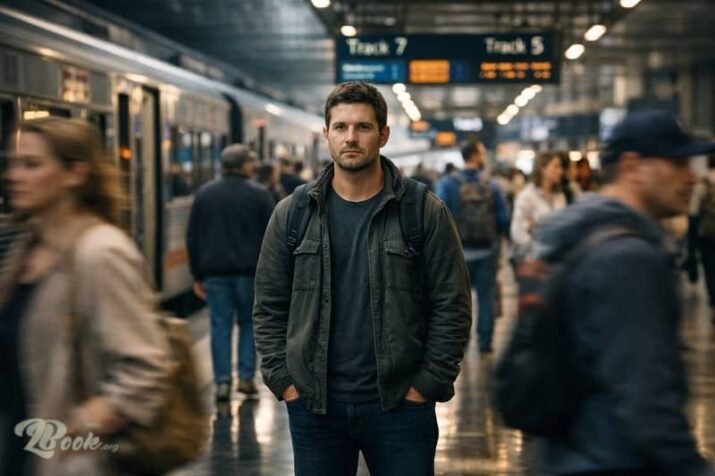
I returned to my homeland after seventeen years, and the return was not just a move from one place to another—it was a psychological and spiritual shock that shook my being. In the early days, my fear was not of the disorder I saw, nor of the corruption I touched, nor of the collapse I noticed. My deepest fear was of something else: “My fear was that I would become what I hate.”
I was afraid that the environment would consume me, that I would become part of the reality I reject, that I would lose myself gradually without realizing it. This article is not about the turmoil we live in—it is about the internal battle to preserve the essence in a time of lost balance.
1. New Reality Shock
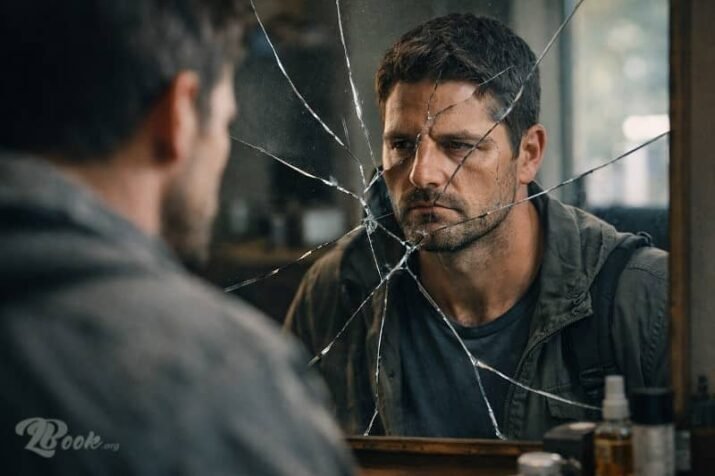
In the early days after my return, I felt as if I had entered a completely different world. Everything was different: the way people spoke, the way they treated each other, the way they thought. The disorder was not just in the streets—it was in souls. “The difference between what I expected and what I found was shocking.” I expected to find a homeland waiting for me—I found a reality that wanted to swallow me.
This shock was not just a first impression—it was the beginning of a long journey of questions. Did I change during the years of exile, or did the homeland change? Can a person live in a corrupt environment without being affected by it? These questions accompanied me in every step, every meeting, every situation.

2. The Unspoken Fear
As days passed, I realized that my real fear was not of difficult circumstances, poverty, or corruption. “My real fear was of internal change, of losing myself gradually.” I was afraid of becoming like those around me, of getting used to disorder, of accepting injustice, of becoming accustomed to lies. I was afraid of waking up one day and finding that I was no longer myself.
This silent dread is the most painful. Because it is not a fear of something external that can be confronted—it is a fear of something internal, of a slow transformation that we may not feel until it is too late. I was afraid of waking up one day and finding that I had lost something precious without realizing it.
3. Environmental Pressure
The environment is not just a place—it is a pressure that affects our behavior and thinking. “A corrupt reality does not ask you to become corrupt—it makes you get used to corruption.” This is the real danger. Not that someone asks you to do evil—but that disorder becomes normal, and you lose the ability to distinguish between right and wrong. When you see corruption every day, it begins to seem ordinary. When you hear lies every day, they begin to lose their shocking power.
In the beginning, the compromises were small. A word I did not say. A situation I did not confront. A truth I ignored. But these small compromises accumulate, become habits, and habits become character. I felt myself slipping slowly, unable to stop. This is the creep of slow change.
4. Change or Adapt?
This is an important question. There is a big difference between adapting and abandoning oneself. “Adaptation is changing the way you deal with reality—abandonment is changing who you are.” In the beginning, I thought I was adapting to the new reality, but I later realized that I might be abandoning my human essence. Adaptation means learning to deal with disorder without becoming part of it. Abandonment means stopping resistance and becoming like them.
Internal will is the only fortress against this creeping change. Without awareness, we slip into the path of abandonment without realizing it. The question I ask myself every day: Am I adapting to survive, or am I abandoning to survive?
5. Clash of Values
When we live in a reality different from our values, an exhausting internal conflict arises. “What we believe inside clashes with what we live outside.” This conflict consumes energy, causes psychological exhaustion, and makes us wonder: Do we hold onto our values and face the consequences, or do we adapt our values to reality to live in peace? This internal tension is one of the hardest aspects of living in a corrupt environment.
On some days, I felt as if I were living in a state of division. Part of me wanted to belong to this place, and part of me refused to become part of its toxic culture. This struggle was not easy. But I learned that this struggle is proof that I am still alive—that I still refuse to surrender.
6. How to Stay Myself
The answer I arrived at is awareness. Awareness is the first line of defense. To watch myself, to pay attention to small changes in my behavior and thinking. “Awareness is seeing yourself before you lose it.” Without awareness, we slip without realizing it. Awareness is asking yourself every day: Did what I did today align with who I am? Did I compromise something of my humanity? Did I become harsher or more indifferent?
Self-watching is not easy, but it is necessary. It is like a mirror you place before your face every morning—not to see your appearance, but to see your soul. Have its features changed? Has it become darker? Has it lost its shine? These questions keep me on the right path.
7. Against the Current
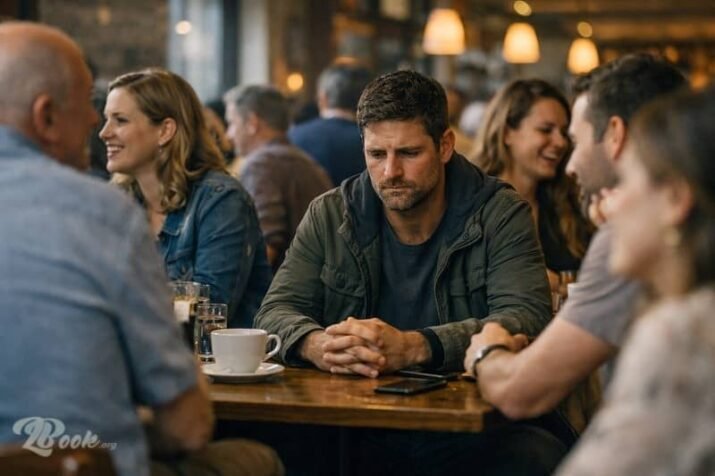
The current is strong, and everyone is swimming with it. “The easiest thing is to drift with the current. The hardest thing is to swim against it.” But swimming against the current is what preserves our humanity. When you see everyone doing something, it is easy to do the same. When you see everyone speaking a certain way, it is easy to speak like them. But this ease is a danger.
Surrendering to the current means losing oneself. Becoming part of the turmoil we reject. But choosing to swim against the current—even if it is hard—is what keeps us spiritually alive. We may be alone in this current, but our aloneness is better than losing ourselves.
8. Voluntary Withdrawal
In the midst of disorder, voluntary withdrawal may be a way to preserve the self. “Not all withdrawal is escape—some of it is protection.” Taking time away from the noise of reality, to think, to reflect, to pray, is a way to recharge the soul. Withdrawal is not separation from the world—it is a way to stay connected to oneself.
In an age of constant connection, withdrawal has become a rare luxury. But it is necessary for those who want to preserve their soul. It is a moment to listen to our inner voice, which is often drowned out by the noise of the external world.
9. Searching for Oases
In the middle of the barren desert, there are oases. “Searching for good people is searching for life.” These are the ones who remind us that goodness still exists, that we are not alone in this battle. Having pure people around us is support beyond value. They remind us that we are not crazy for refusing corruption.
Finding these people may be difficult in a corrupt environment, but it is not impossible. They exist—they are hiding like us. Waiting to be discovered. When you find them, hold onto them. They are the oases that prevent you from drying up. They remind you that goodness is still possible.
10. Faith as Protection
Faith is the strongest fortress against internal corruption. “Faith is not rituals—it is a fortress that prevents poisons from entering the soul.” Prayer, reflection, spiritual reading—all are tools to strengthen this fortress. When we feel disorder surrounding us from every side, faith is the anchor that keeps us steady.
Faith is not just a belief—it is a living relationship with what is higher than us. It is the feeling that we are not alone, that there is someone who sees us and cares for us. This feeling is what gives us the strength to face turmoil without losing ourselves.
11. Change from Within
We cannot change reality overnight, but we can change ourselves. “Real change does not begin from the outside—it begins from within.” Before we try to change the world, we must protect what is inside us. Preserving the self in a time of disorder is the hardest kind of change. But it is also the most important.
Internal change is a long journey, but it begins with a small step: deciding not to surrender. Deciding to remain as you are, no matter the circumstances. Deciding to be yourself, even if the price is isolation. These small decisions are what make the difference between those who remain and those who lose themselves.
12. The Real Question
I returned to my homeland, saw the disorder, and felt fear. But the question that stayed with me is: “Who have I become inside this reality?” Not the question about reality, but about the self. Not about what happens outside, but about what happens inside. Reality cannot be changed immediately, but the inside can be protected. We can choose not to become what we reject. We can remain faithful to ourselves, even if the price is loneliness, difficulty, or exhaustion.
“The real question is not ‘Will the world succeed?’ but ‘Will I succeed in remaining myself?'” This question keeps us vigilant. It prevents us from drifting. It reminds us that we have a choice, even when we think we do not. The most important choice is the choice to remain who we are—the choice not to become what we reject, the choice to preserve the human within us, no matter the circumstances. “Reality cannot be changed immediately, but the inside can be protected. And that protection is the greatest victory of all.”
Recommendations
1. Watch yourself daily. Ask: Did what I did today align with my human essence?
2. Do not be afraid of voluntary withdrawal. It is not escape—it is protection.
3. Search for good people. They are the oases in the desert.
4. Strengthen your faith. It is the strongest fortress against internal corruption.
5. Do not surrender to the current. Swimming against it is the only way to stay spiritually alive.
6. Remember that change begins from within. Before you try to change the world, protect what is inside you.
7. Ask yourself the real question: Who have I become in this reality?
Conclusion
I returned to my homeland, saw the disorder, and felt fear. But I discovered that the real fear is not of reality—it is of losing oneself within it. I learned that preserving humanity in a time of turmoil is a daily battle—a battle between what we want and what reality wants from us. “Reality cannot be changed immediately, but the inside can be protected.”
We can choose not to become what we reject. We can remain faithful to ourselves, even if the price is difficulty, loneliness, or exhaustion. In the end, the real question is not “Will the world succeed?” but “Will I succeed in remaining myself?” And in that question lies the answer to everything. Because the one who preserves their soul, even in the midst of chaos, has already won the greatest battle.
Related Posts
- Fear of Transformation: How to Stay Human
- Signs of the Great Tribulation in Our Time
- Killing Is Not Limited to the Body: The Invisible Kinds
- When the Atheist Is Moral and the Believer Is Cruel
- The Angry and the Evil: When Emotion Becomes Malice
- Is God an Avenger? Human Revenge vs Divine Justice
- Does the Miser Know God? When the Body Prays
How Did Humility Become Weakness?