Barren Desert Oases: My Journey with the Good Minority
Barren Desert Oases: My Journey with the Good Minority
Introduction
After I wrote about the shock of return, about living among cold hearts, and about the theater of masks that swallowed the sincere, some thought I had lost all hope. They thought the man who wept over the ruins of his homeland had surrendered to despair. But the truth was different. Yes, I saw ugliness. Yes, I tasted betrayal from those closest to me. Yes,
I cried until my tears ran dry. But in the depths of this hell, I found something I did not expect: “A handful of souls still beating with life.” They are like points of light in a pitch-black night, like fresh springs in a vast wasteland. They were not many, but their existence was enough to keep me from becoming what I hated. This is my journey with the good minority—with those untouched by the hand of deformation.
1. The Moment of Despair Before Discovery
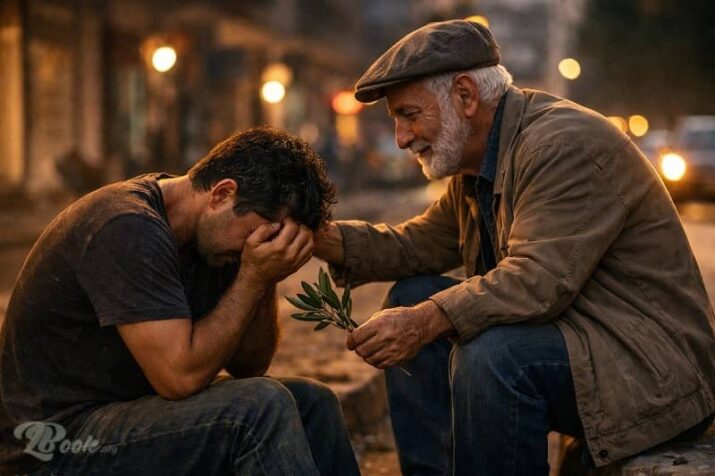
Before I found them, I was on the verge of total collapse. I had convinced myself that everyone around me had lost every trace of goodness, that the infection had spread without exception. One day, I sat on a broken curb, covering my face with my hands, whispering: “It’s all over.” I was at rock bottom, where no voice reaches except the murmurs of despair.
“In that very moment, I felt a hand touch my shoulder gently.” I looked up, and there was an old man I did not know, his blue eyes piercing my face. He said in a quiet voice I had not heard in a long time: “Do not give up. There are still those who love you.” He did not know me, did not ask about my money or status. He simply felt my pain and extended his hand without expecting anything. That was the first olive branch after a great flood.


2. Why Did They Stay Different Despite All the Storms?
I asked myself for a long time: How did these few withstand the general collapse? They were not rich, nor protected by influential people, nor isolated from reality. On the contrary, they lived through the same wars that destroyed homes, the same poverty that humiliated souls, the same betrayal that turned others into stones. But something inside them was different.
“They had a firm internal foundation that did not waver with external changes.” Some clung to their faith with sincerity—not as actors, but as drowning people holding onto a lifeboat. Others carried pure human values, learned from their mothers in childhood or from a rare teacher. Their internal compass of goodness did not break despite all the storms.
3. How to Distinguish the Sincere from the Actor Quickly?
After being deceived by masks many times, I developed a third eye to detect the truly good. Some signs do not deceive. The first and most important is the look. The eye is a mirror that cannot act. The eyes of the sincere have a strange warmth, even when they are sad, as if there is a faint light shining from within.
“Other signs include their attention to small details—like asking about something you mentioned a month ago.” Their reluctance to take, as if shy of receiving. Their genuine laughter, like the innocent laughter of children. They do not master acting, and that is exactly what makes them real. In a world of professional actors, they remained amateurs in honesty.
4. The Old Woman Who Gave Me Everything Though She Had Nothing
One of the deepest springs I encountered was an elderly woman, living in a room no larger than a few square meters. A widow, poor, sick, unvisited by her relatives. On my first visit, I sat by her humble bed, we talked a little, and then she surprised me.
“She pulled out from under her bed a small, worn bag, opened it with trembling fingers, and took out an old piece of biscuit.” She said: “I saved this for you.” That single biscuit was all she owned. She gave me the most precious thing she had without hesitation. In that moment, I cried like a child. My tears were not for her poverty, but for her purity that the years had not touched.
5. The Only Friend Who Never Betrayed Me
During the seventeen years I spent in Europe, there was only one friend who never cut ties with me. He never asked me for anything. All he did was send a message every month: “We miss you. Come back safe.” Those messages were like stars guiding me through cold winter nights.
“When I finally returned, I found him exactly as I had left him.” Nothing had changed. The same sincere smile, the same honesty, the same poverty he never complained about. I later discovered he had been going through very difficult circumstances, barely finding his daily bread, yet he never complained. He never asked for my help, but offered his help before I could ask. That friend was the antidote to the poison I drank from others.
6. The Stranger Who Helped Me for No Reason
Another event still fills me with wonder. I was stranded in a dark street late at night, my car broken down, my phone dead. Everyone rushed past me. An hour passed, then two, and my despair turned into stunned disbelief.
“Finally, an old, modest car stopped, and a young man in his twenties got out.” He barely looked at me before saying: “Come on, I’ll take you where you need to go.” I did not ask why he helped me, and he did not ask for explanations. On the way, I discovered he worked in a small workshop, barely earning enough for a week. He refused any payment and said: “God helps me every day for no reason—why shouldn’t I help others for no reason?” That young man was a monk in worker’s clothes.
7. Why Do Corrupt Societies Look Down on the Good?
I noticed a strange and painful phenomenon: people do not appreciate these good souls; rather, they mock them. They are accused of naivety, weakness, or stupidity. Why? Because they do not know how to deceive like others, nor how to seize opportunities at the expense of their neighbors.
“But the truly good are the strong, not the weak.” They withstood a sweeping current that swept away thousands. They are like a rare tree in a violent storm, standing because its roots extend to a depth others lack. They are not stupid, but intelligent in a way that those who sold their consciences cannot understand.
8. The Price of Goodness
Goodness in a time of harsh cruelty is never free. The faithful few pay a heavy price: harsh social isolation, poverty often, and constant mockery from family and friends.
“Some pay an even higher price.” They may lose their jobs because they refused to bribe. They may lose their marriages because they refused to lie. They may lose their safety because they stood up to an oppressor. Yet they insist on remaining as they are, as if they have a covenant with themselves they refuse to break. Not because they do not see the easy alternative, but because they consider transformation a betrayal of themselves.
9. How Do You Protect Your Oasis?
These steadfast souls developed special strategies to protect themselves. First: distancing from sources of psychological pollution, even if they are relatives. Second: choosing their battles wisely—they fight for endurance, not for attack.
“Third: building a private space—a corner in the house, a room—that serves as a safe refuge.” Fourth: staying connected with others like them, even if few, for mutual support. And finally: investing in culture—good books and pure ideas create an internal world the corrupt environment cannot easily penetrate.
10. Are the Good Stupid, or Intelligent in a Different Way?
Some would ask me mockingly: “You think you’re smart? Come on, let’s do a deal.” I would smile and not answer. But now I can say with confidence: true intelligence is not your ability to exploit others, but your ability to remain human in an environment that tries to turn you into a predator.
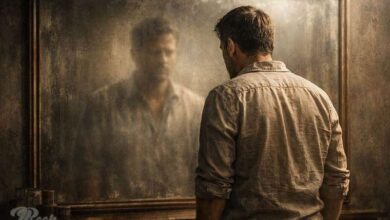
“The truly good are not stupid—they are intelligent in a deeper way.” They realized early that the real treasure is not money that vanishes, nor power that fades, but inner peace. And sleep without nightmares. And the ability to look in the mirror every morning without disgust.
11. What If You Are the Only Oasis?
This is a sincere message to every man and woman who feels they are the only good person in their harsh surroundings. I tell you honestly: do not ever lose hope. Being the only one does not mean you are wrong—it means you are the beautiful exception in an ugly place.
“Keep yourself as you are, and do not try to change society by force.” Look for other oases outside your geographical area—through the internet, through travel, or through reading books that remind you of others like you in every time and place. Remember that saints, prophets, and great people were always minorities. Your life may be difficult, but you light up the darkness by your very existence.
12. Conclusion: The Good Minority is the Real Treasure
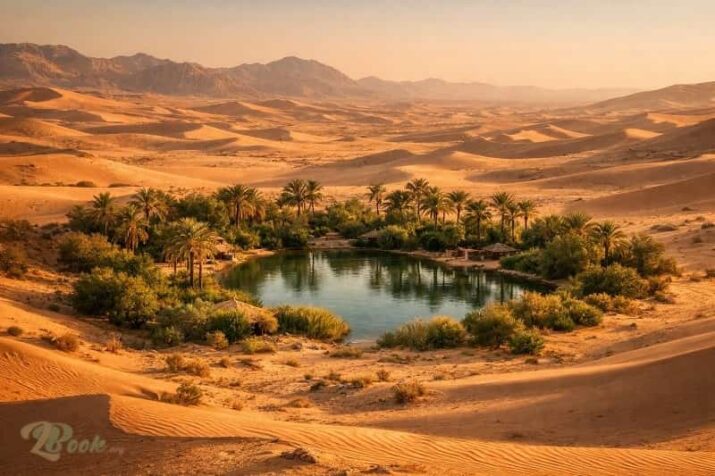
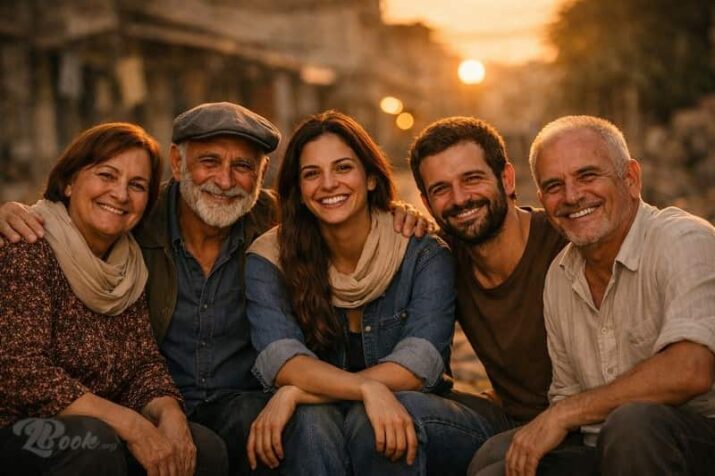
After this long journey, I realized that the good minority is not just a group of people I happened to meet. They are the real treasure in a world that has lost its way. They are the proof that goodness has not died, that humanity is not a myth, and that the desert can bloom if it finds just one spring.
“I returned to my homeland and found that simplicity was a crime—but I also found that the good still exist.” They are few, hidden, and do not appear to those who do not seek them sincerely. But they are there. They are the ones who prevent the desert from becoming a pure hell. Thank you to every oasis I have known. And I will try to be an oasis for others. Because this is the only way to make the desert less harsh.
Recommendations
1. Do not judge the whole desert by its hot sands alone. There are oases hiding in places you do not expect. Search deeply and sincerely.
2. If you find a real oasis, take care of it as if it were your own eye. Visit it, drink from its water, and learn the secret of its endurance.
3. Never be ashamed of your goodness, even if you are accused of naivety. You are the real treasure in a time when treasures have lost their value.
4. Do not try to change the whole world—that is impossible even for prophets. Just light up what is around you as much as you can.
5. Remember: the real treasure is the buried treasure. Everything on the surface is either fake or has lost its true value.
Conclusion
I returned to my homeland and found that simplicity was a crime. I was shocked, I wept in silence, and I picked up my pen. This article is a defense of every kind, gentle, transparent soul that carries the image of God and is met with contempt by the world. The arrogant do not see this image, because their eyes are sealed. But it will appear on the day when all masks fall, and every soul is called by its true name.
On that day, every arrogant person will wish they had been simpler. They will wish they had smiled at those they ignored, embraced instead of pushed away. Do not let regret catch you off guard. Start today. Respect every human. Honor simplicity. Bow to the humble. For they, in the highest realms, hold a place you cannot reach with your pride.
Related Posts
- Barren Desert Oases: My Journey with the Good Minority
When Homeland Becomes a Stage
- How Do You Breathe in a Dead City?
- Heartbreak of Homecoming: When Homeland Hurts More
- Effective Strategies for Managing Stress at Work and Life
- How to Overcome Depression: A Comprehensive Overview
- Human Values as the Foundation of a Healthy Society in Chaos
- Kindness Strength or Weakness in a Corrupt World
How Narcissism Negatively Affects Mental Health