When Homeland Becomes a Stage
When Homeland Becomes a Stage
Introduction
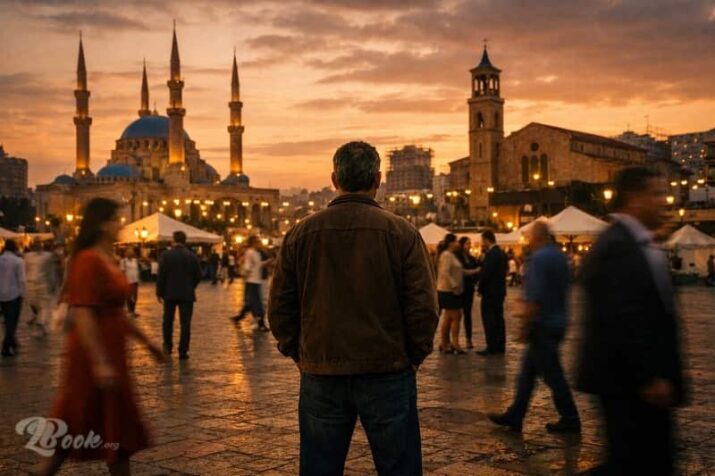
“I returned to my homeland after seventeen years, only to discover that the real performance had just begun.” Everyone around me was playing a part. The father played the wise patriarch. The mother played the devoted matriarch. The brother played the loyal sibling.
Even religious leaders performed their roles in churches and mosques alike. Imagine living in a country where you no longer know who is sincere, because everyone wears a mask. Imagine sitting at the dinner table with your family, and wondering: Which one of you is telling the truth right now? This is not a homeland. This is a theater. And I was the only one still searching for what lies behind the curtain.
1. The Family Stage
In my own home, everyone performed. My father played the firm but loving patriarch—speaking of values and principles, while secretly making shady deals. My mother played the self-sacrificing mother—weeping and swearing she wanted the best for everyone, while her words were quicker to wound than a blade. My brothers: one played the “successful ideal,” another played the “oppressed failure” to win sympathy. “There is no curtain. They live their parts twenty-four hours a day.” Homes here are not homes. They are backstage dressing rooms.
2. Siblings: Daggers Behind Kisses
Kissing cheeks in my homeland is not a sign of affection. It is a security check. Each kiss hides an interrogation: Where did you come from? What did you bring? How much did you earn? After the kisses, the gossip begins. My older brother, for whom I wept in exile, called my younger brother after I left—not to ask about me, but to ask:


“What did he say? How much money does he have?” “These are not brothers. They are agents in a family intelligence service.” Every piece of information is recorded. Every weakness is exploited. Every opportunity is seized. The hardest part is that they feel no guilt. For them, this is normal.
3. False Friends
I returned to meet childhood friends. The men I played football with, cried with, and shared holiday sweets with. At first, the meetings were like Hollywood films: warm embraces, fake tears of reunion, promises to stay in touch. After a week, they disappeared. No calls, no messages.
Then I heard by chance that one of them was asking about me: “Why did he come back? Did he steal something in Europe? Is he a fugitive?” “These are not friends. They are broken mirrors reflecting their own fears, not love.” Friendship here is not a relationship. It is currency. When the benefits stop, the friendship stops.
4. Neighbors: The Kingdom of Gossip
A neighbor here is not someone who protects you. A neighbor is someone who watches you. “Every move you make becomes news on the local radio before you even turn off your light.” I entered my new home, and within an hour, every woman in the neighborhood knew I had bought expensive curtains.
I couldn’t understand how the news spread so fast. Then I realized: one neighbor had been standing behind his window, watching every box that entered. These are not neighbors. They are a documentary film crew for your private life. Gossip is the national sport, and slander is the mother tongue.
5. Officials: Masters of Acting
I will never forget a scene I witnessed with my own eyes. A government official stood before citizens, raising his voice, swearing by God that the law did not allow it, that his hands were tied, that he wanted to help but couldn’t. The citizens left thanking him for his “dedication.” I entered after them, closed the door, and placed money on the table.
“In an instant, everything changed.” He became kind, flexible, and the law suddenly became “open to interpretation.” This man was not an official. He was a first-class actor. Officials here master the art of performing more than any professional performer. Every situation has a disguise. Every visitor has a role. Every case has a script.
6. Religious Leaders: Performers Before God
This is the greatest tragedy. I entered a mosque once. The preacher was making people cry with tears of repentance. I followed him out the back door. He took off his robe, sat with a friend, laughed, cursed, and mocked those who had been crying just moments before. Someone told me about a priest who preached love and tolerance, then sat down after Mass to “settle” a land deal. “These are not religious leaders.
They are brokers between heaven and earth—at discounted rates.” They act before God, sell religion to the highest bidder, and turn houses of worship into advertising agencies. The tragedy is that people know this—and accept it. Because everyone is acting, so why should religious leaders be exempt?
7. Businessmen: Pirates in Suits
I dealt with one of the wealthiest merchants in my city. In our first meeting, he was polite, smiling, speaking of social responsibility, and his role in developing the country. After we signed the contract, I discovered his goods were counterfeit, and that he had stolen my rights with a single line on the last page.
When I confronted him, he laughed in my face and said, “This is business, my friend. Learn to play or leave.” This is not a businessman. This is a pirate in an elegant suit. Businessmen here turn economics into a dark comedy. They speak of development while smuggling money abroad. They cry over unemployment while importing cheap labor.
8. Media: The Stage Above
Imagine watching a news bulletin full of tears, promises, and heroism. Then you step outside and find none of it. “The media here is not a mirror of reality. It is a factory of alternative drama.” The anchor reads the news as if reciting a passionate poem, then turns off the camera to curse his colleagues.
The journalist writes about corruption, then goes to collect his bribe. The channel broadcasts moral guidance, while its advertisements exploit women. This media is a stage above the stage. They think they are fooling us. But we all know they are performing. And we all pretend to believe them. Trust begins to crumble here.
9. The Street: Many Faces
Walking through the streets of my homeland became a surreal experience. I saw many faces, each one wearing a different disguise. The vendor smiles to sell his spoiled goods. The taxi driver swears he’s not cheating, then takes double the fare. The passerby appears friendly, then ignores you a second later.
“In Europe, faces are clear: those who love you, love you. Those who hate you, you know it.” Here, everyone wears the veil of neutrality. But the eyes never lie. In their eyes, I see greed, fear, hatred, envy. Sometimes I feel like I’m living in a psychological horror film, where every person you meet could be your killer or your friend—and both are playing the same part.
10. Extended Family: Holy Lies
In our society, the extended family means that every relative has a role in this play. The uncle visits to “check on you”—but in reality, he’s inspecting your possessions. The aunt praises you to make others jealous. The cousin smiles to your face and spreads your secrets minutes later. Family visits are no longer meetings of love.
“They are intelligence conferences.” Every side gathers information about the other to use at the right moment. The elderly woman who visits for “blessings” is in reality a spy in plain sight. This chain of lies has become a sacred ritual—practiced by all, questioned by none.
11. Social Occasions: Festivals of Fake Joy
Weddings and funerals here are the greatest theaters of performing. At weddings, everyone laughs, claps, and appears happy. But behind the lights, some envy the groom, some curse the bride’s family, some wish for the celebration to fail. At funerals, everyone weeps and wails and recites prayers.
But behind the curtains, some rejoice at the inheritance, some calculate how much they will gain from condolences, and some secretly celebrate another’s misfortune. “Here, masks reach their peak.” I cry and laugh at the same time. At these occasions, I discovered that everyone is an actor. And I am the only one who doesn’t know how to perform.
12. Conclusion: Losing Myself
Finally, what about me? I, who tried to be honest in a land of performing. I became a real stranger. When I say what I think, I am accused of rudeness. When I show my sadness, I am accused of weakness. When I cry out against injustice, I am accused of madness. “I am the man who shouted in the theater: ‘The king is naked!’—and was scolded and thrown out.”
I discovered that the worst thing you can be in this country is honest. Honesty here is not a virtue; it is a stain of shame. So I am alone, sitting in a corner of this theater. I do not applaud. I do not participate. I only watch and ache. And sometimes, I catch myself wearing a mask too. “Even I began to lose who I was.”
Recommendations
1. Do not try to expose yourself performing in front of everyone. Professional performers do not like those who reveal their disguises—they may turn into monsters.
2. Choose a very small circle of people you trust to be sincere, even if they are only one or two. Make them your real family.
3. Learn the art of “safe acting”—being honest inside yourself, while interacting with the performance only when necessary, without becoming part of it.
4. Keep your own space: your home, your room, your book, your corner. A small place where you can be yourself.
5. Do not hate the performers. Pity them. They are also victims of this virus, and they do not know how to heal.
Conclusion
Now, as I close the door behind me, I hear the noise of the performance outside. My father plays the father. My mother plays the mother. My brothers play the brothers. The neighbors play the neighbors. The official plays integrity. The religious leader plays piety. Everything is fake. Everything is upside down. “I close my eyes and imagine a curtain suddenly falling—and all the voices fall silent.”
Then I open my eyes. They are still acting. I step out of the room, smile a faint smile, and continue my role as the “happy returning son.” Yes, I too was forced to perform. This is the worst part of the play: even I began to lose who I was. Forgive me, homeland. You have turned us all into actors. And now, no one remembers who they were before the curtain rose.
Related Posts
- When Homeland Becomes a Stage
- How Do You Breathe in a Dead City?
- Heartbreak of Homecoming: When Homeland Hurts More
- Effective Strategies for Managing Stress at Work and Life
- How to Overcome Depression: A Comprehensive Overview
- Human Values as the Foundation of a Healthy Society in Chaos
- Kindness Strength or Weakness in a Corrupt World
- How Narcissism Negatively Affects Mental Health
Has the Animal Become Kinder than Humans?