Pass Me Not O Gentle Savior Hear My Humble Cry
Pass! Me Not, O Gentle Savior Hear My Humble Cry – Hymn with Lyrics
Pass Me Not
Pass! me! not, O gentle Savior
Hear my humble cry
While on others Thou art calling
Do not pass me by
Refrain
Savior, Savior
Hear my humble cry
While on others Thou art calling
Do not pass me by
Let me at Thy throne of mercy
Find a sweet relief
Kneeling there in deep contrition
Help my unbelief
Trusting only in Thy merit
Would I seek Thy face
Heal my wounded, broken spirit
Save me by Thy grace


Thou the Spring of all my comfort
More than life to me
Whom have I on earth beside Thee?
Whom in Heav’n but Thee?
By Fanny J. Crosby and W. H. Doane
▶ Pass Me Not (Video)

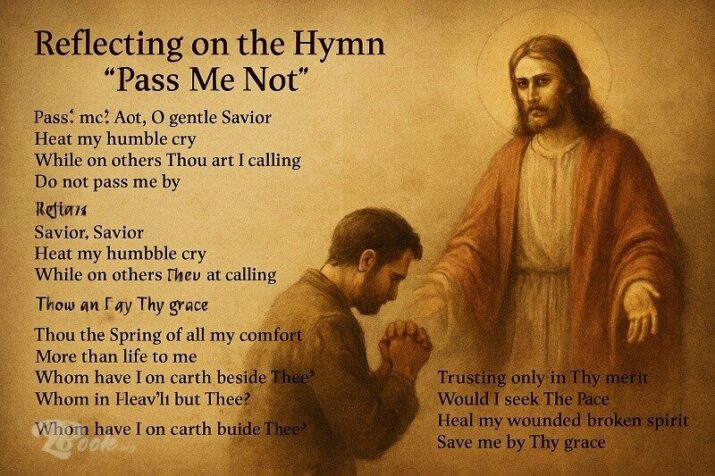
Reflecting on the Hymn “Pass Me Not”
The hymn Pass Me Not is a heartfelt plea to the Savior for mercy, attention, and grace. It captures the deep spiritual longing of a soul who fears being overlooked amid many others seeking divine help. This timeless song resonates with believers who desire a personal encounter with Christ’s compassion and healing. Through its simple yet profound lyrics, it invites us to reflect on our own faith journey, our need for grace, and the assurance found in God’s unfailing love. In a world filled with distractions and many voices calling for attention, this hymn reminds us that God’s gaze never misses those who earnestly seek Him.
1. The Gentle Savior’s Compassion
The hymn opens by addressing Jesus as the “gentle Savior,” a title that beautifully reflects His tender and compassionate nature. This image contrasts sharply with the harshness of the world and the often relentless demands of life. Recognizing Jesus as gentle reassures believers that approaching Him is safe and welcomed, no matter how broken or weary they feel. It invites us to remember that God’s love is patient and kind, ready to meet us where we are with mercy instead of judgment. The gentleness of Christ becomes a refuge for the fainthearted and a balm for the troubled soul.
2. The Cry of the Humble Heart
The repeated plea, “Hear my humble cry,” captures the essence of humility before God. It teaches us that genuine prayer does not arise from pride or self-sufficiency, but from an honest recognition of our need for divine help. This cry is not loud or demanding but tender and sincere, born out of a broken spirit. It invites us to examine our own hearts — do we come to God with true humility, or do we sometimes rely too much on ourselves? The humble cry also encourages believers to trust that God attentively listens to even the faintest whisper of a contrite heart.
3. The Fear of Being Passed By
The fear expressed in the hymn — that Jesus might “pass me by” while calling others — reveals a deep human anxiety about being overlooked, forgotten, or left behind. This resonates with many who feel invisible in the crowd or insignificant in the grand scheme of things. Yet, this fear also invites a profound truth: God’s love is intensely personal. Despite the multitude of souls He calls, each individual’s need matters deeply to Him. Reflecting on this, believers are encouraged to trust that no one is lost or ignored in God’s kingdom; each one is precious and known intimately.
4. Finding Refuge at the Throne of Mercy
The hymn invites the believer to “find a sweet relief” at the throne of mercy, portraying God’s presence as a sanctuary of peace and restoration. This image calls us to approach God’s mercy seat boldly and frequently, knowing it is the place where burdens are lifted and weary souls find rest. It challenges us to move beyond mere religious routine to a heartfelt encounter where healing flows freely. In moments of despair, anxiety, or spiritual dryness, returning to this throne becomes the source of renewal and strength to carry on.
5. The Depth of Contrition
“Kneeling there in deep contrition” emphasizes the profound sorrow and repentance that precede forgiveness. Contrition is not simply feeling sorry for mistakes; it is a brokenness over sin that transforms the heart. This posture of humility before God invites us to lay bare our failings without excuse or denial. It encourages sincere confession and the willingness to be changed. The depth of contrition marks the turning point from separation to reconciliation with God, opening the door for His mercy to heal and restore.
6. Wrestling with Unbelief
The plea “Help my unbelief” reveals an ongoing inner struggle that many believers face—a battle between faith and doubt. This admission shows that faith is not always effortless or constant; it sometimes wavers and needs divine support. Reflecting on this vulnerability encourages honesty in our spiritual journey, recognizing that asking for help in believing is itself an act of faith. It also points to God’s role as the giver and sustainer of faith, who lovingly strengthens our trust when it falters.
7. Trusting in Christ’s Merit Alone
The desire to “seek Thy face” trusting solely “in Thy merit” highlights the biblical truth that salvation and acceptance before God are not earned by human effort but granted through Christ’s perfect work. This focus on grace challenges any tendency to rely on self-righteousness or good deeds. It reminds us that our approach to God must be founded on faith in Jesus’ sacrifice, not on our own merit. Embracing this truth brings freedom from guilt and the assurance that God’s acceptance is unconditional and complete through Christ.
8. Healing the Wounded Spirit
The request to “heal my wounded, broken spirit” speaks to the deep emotional and spiritual pain many carry. Life’s hardships, failures, and losses often leave scars that only God’s grace can truly mend. This plea recognizes Christ as the ultimate healer who restores not just physical needs but the inner person. Reflecting on this invites believers to bring their brokenness honestly before God, trusting that His love has the power to renew and make whole even the most shattered hearts.
9. Christ as the Source of Comfort
Calling Jesus the “Spring of all my comfort” beautifully portrays Him as the unending source of peace, joy, and strength. Unlike earthly comforts that are temporary and unreliable, Christ’s comfort is constant and life-giving. This metaphor encourages believers to draw continually from Him, especially in times of trial or sorrow. It also invites us to deepen our relationship with Jesus, discovering that true rest and satisfaction can only be found in His presence.
10. The Sole Dependence on Christ
The hymn’s closing question — “Whom have I on earth beside Thee? Whom in Heaven but Thee?” — powerfully affirms the exclusive and all-sufficient nature of Christ as our hope and salvation. This declaration challenges us to examine what or whom we depend on in life. It calls believers to center their faith and trust wholly on Jesus alone, recognizing that no other person, possession, or circumstance can replace His role as Savior and sustainer. It is a reminder that our ultimate security and joy are found only in Him.
Recommendations for Personal Reflection and Growth
Cultivate a heart of humility by regularly confessing your need for God’s mercy and grace, recognizing that spiritual growth begins with acknowledging our dependence on Him.
Reflect on God’s personal love for you to overcome feelings of insignificance or fear of being ignored, remembering that He calls each individual by name.
Make it a daily practice to approach God’s throne of mercy, allowing His presence to bring refreshment and healing in every circumstance.
Be honest about your doubts and struggles with faith, and invite God to strengthen your belief, knowing that faith can grow through vulnerability.
Anchor your trust entirely in Christ’s merit, letting go of reliance on your own efforts and resting in the sufficiency of His sacrifice.
Bring your brokenness and wounds to God, trusting that He alone can heal and restore your spirit fully.
Seek to deepen your relationship with Christ, the true and lasting source of comfort, by spending time in prayer, worship, and Scripture.
Evaluate your life’s dependencies and make Christ the center of your hope and security above all else.
Conclusion
The hymn Pass Me Not serves as a profound spiritual mirror reflecting our deepest needs for mercy, grace, and divine attention. It’s heartfelt words challenge us to approach Jesus with humility and faith, trusting that His compassion is always available to the seeking soul. As we meditate on each verse, we are reassured that we will never be passed by or forgotten. Instead, we are invited into an intimate relationship with the gentle Savior who heals, comforts, and sustains us. Embracing this truth encourages us to walk boldly in faith, confident in the enduring presence of Christ’s unfailing love.
More Hymns
- Father Mansour Labaky’s Story
- I Must Tell Jesus all of My Trials
- I Need Thee Every Hour
- Jesus Paid It All
- O Lord Send the Power
- Lord I Need You
- Fill Me Now, Jesus come
- Have I Done My Best For Jesus?